An Overview of Chittagong Port

Historical Background
The history of Chittagong Port dates back to the 4th century BC, noted in ancient Roman maps. From the 9th to 15th centuries, it thrived under Arab and Mughal trade, earning the name “Porte Grande” in the 16th century from Portuguese settlers. Officially established in 1887 under British rule, it grew significantly after Bangladesh’s independence in 1971.
Geographic Location
| Position: Centered on the Karnaphuli River estuary in southeastern Bangladesh, approximately 11 kilometers upstream from where it meets the Bay of Bengal. |
| Coordinates: 22.32°N, 91.80°E, near Chattogram city. |
| River Context: The Karnaphuli River is a major waterway in the Chittagong Hill Tracts, flowing through Bangladesh and emptying into the Bay of Bengal. Its estuary provides a navigable channel for the port’s operations. |
| Connectivity: Benefits from substantial road and rail connections to Chattogram city, enhancing cargo movement to inland destinations. |
Additional Information
Chittagong Port is Bangladesh’s busiest seaport and is crucial to the country’s economy. It handles about 90% of Bangladesh’s export-import trade. The port has undergone significant modernization and expansion to accommodate the increasing cargo volume.
The port also serves as a gateway to the northeastern states of India, Nepal, and Bhutan, providing them access to international markets. With its strategic location and modern facilities, Chittagong Port remains a key regional and global trade player.
Tidal Range: Tides are crucial in navigation, determining the possibility of crossing shallow areas between Kutubdia points, the Karnaphuli entrance, and bars within the Port Limit. They are semi-diurnal with a significant diurnal effect and have an approximate range of 2.0 to 5.5 meters.
Operational Details
| Pilotage: According to CPA Law, pilotage is mandatory. |
| Radio Communication: The Port Radio Control Room monitors VHF channels 6, 12, 16, and 2182 kHz on a 55B transceiver. |
| Anchorage: The anchorage area is divided into “A,” “B,” and “C.” A special anchorage area is designated for vessels awaiting employment. |
| Night Navigation: Inward and outward movements are restricted to vessels with an overall length (LOA) of 170 meters. |
Infrastructure & Facilities
Jetties and Moorings for Ocean-going Vessels
Owned and operated by the Chittagong Port Authority (CPA), these facilities cater to a variety of cargo types and vessel requirements.
| Facility Type | Quantity | Purpose |
|---|---|---|
| General Cargo Berths | 6 | Handling textiles, garments, and mixed cargo |
| Container Berths | 11 | Containerized cargo operations |
| Dolphin Oil Jetty (POL) | 3 | Petroleum, oil, and lubricants |
| Grain Silo Jetty | 1 | Bulk grain handling |
| Cement Clinker Jetty | 1 | Cement and clinker handling |
| TSP Jetty | 1 | Triple superphosphate fertilizer |
| CUFL Jetty | 1 | Urea fertilizer handling |
| KAFCO Urea Jetty | 1 | Specialized urea exports |
| Ammonia Jetty | 1 | Liquid ammonia handling |
| Dry Dock Jetties | 2 | Vessel repair and maintenance |
| Mooring Berths | 3 | Temporary vessel mooring |
| Total | 36 | – |
Jetties for Inland Coasters and Vessels
| Facility Type | Quantity | Purpose |
|---|---|---|
| Jetty Berth (POL) | 1 | Petroleum products |
| Concrete Berth (Grain) | 1 | Bulk grain handling |
| Pontoon Berths (POL) | 3 | Petroleum products |
| Pontoon Berth (Cement) | 1 | Cement handling |
| Single Point Mooring | 19 | Oil and liquid cargo transfer |
| Total | 25 | – |
Cargo Handling
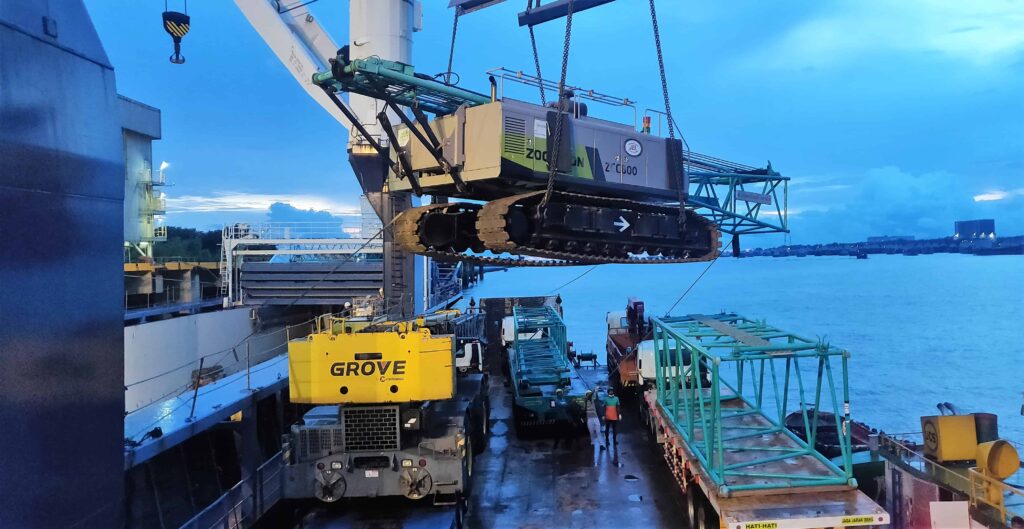
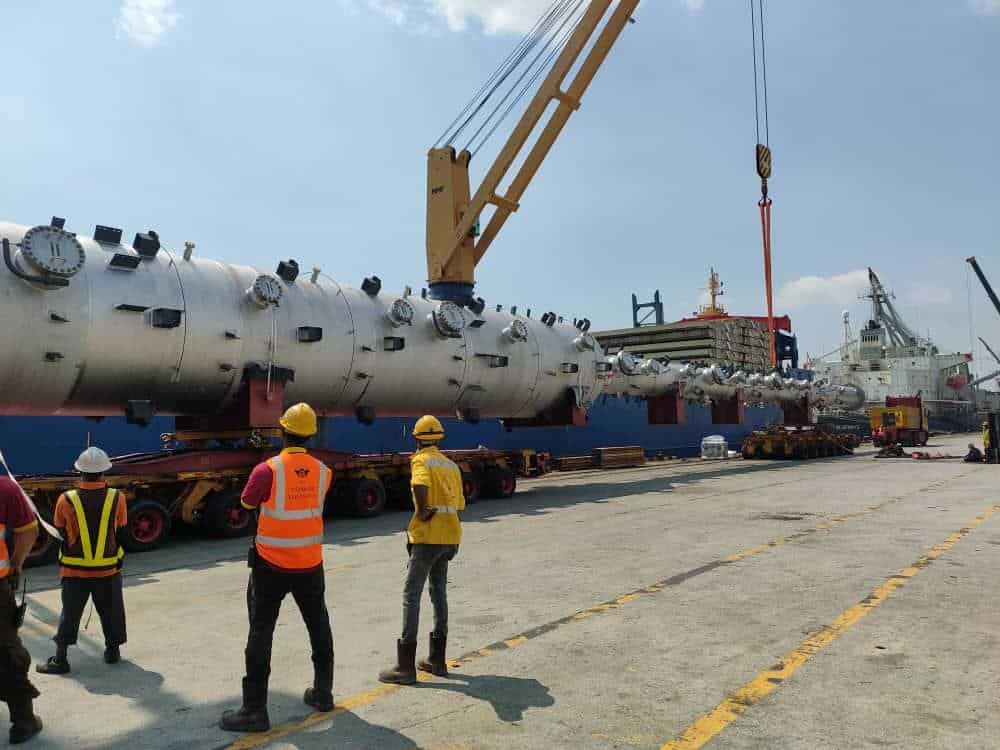
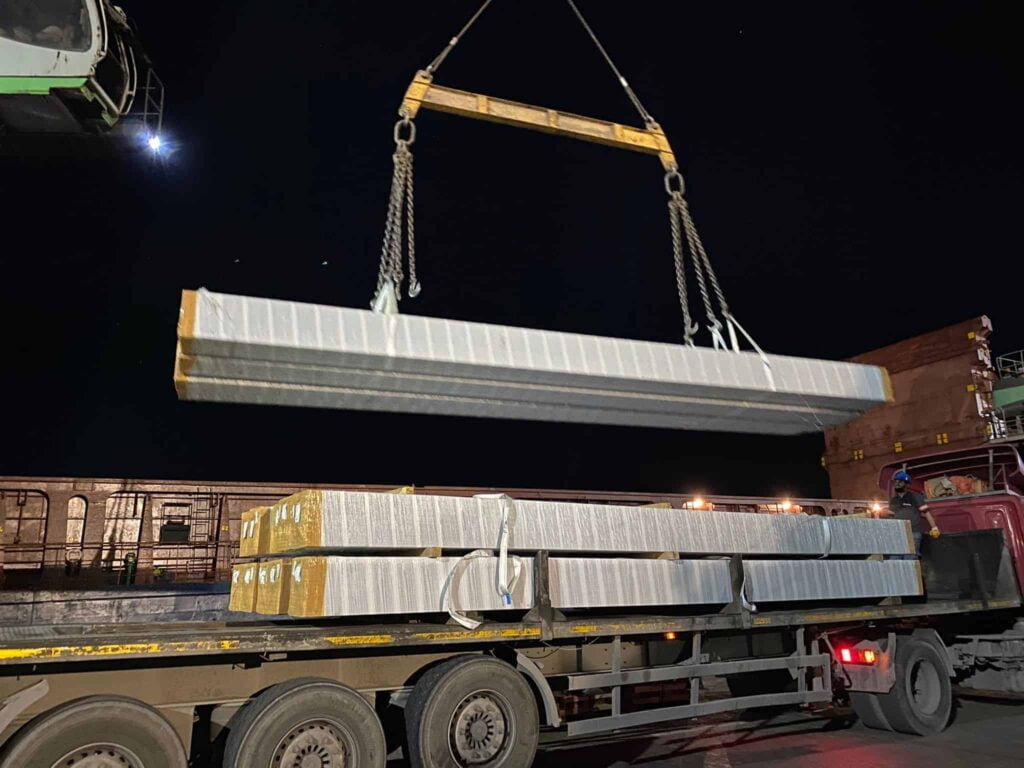
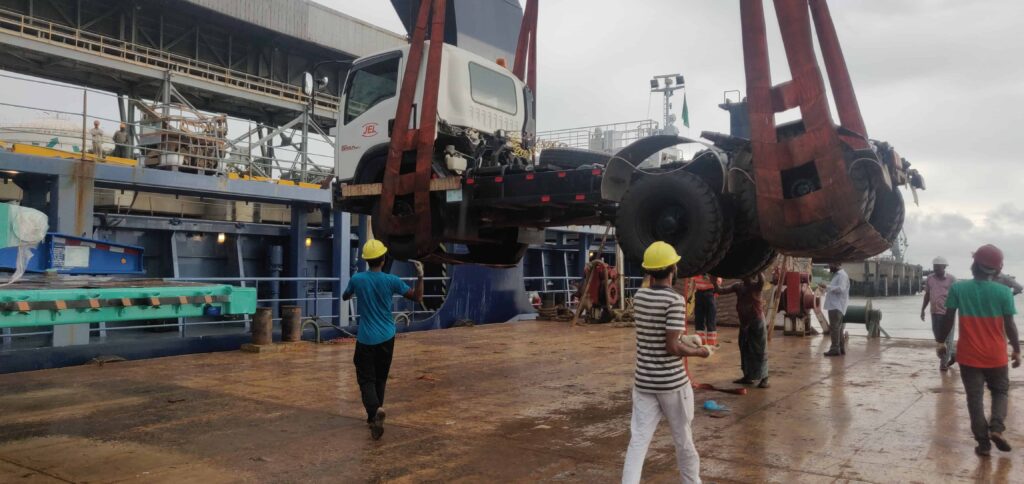
The port handles a diverse range of cargo, supported by specialized equipment and storage facilities.
| Cargo Type | Details |
|---|---|
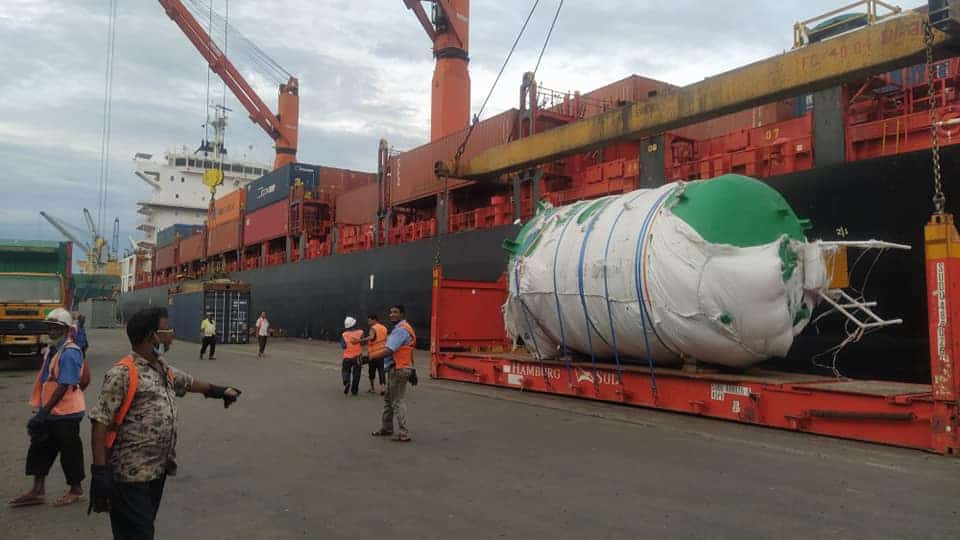
| Containers | Handled at dedicated container terminals with modern cranes |
| Bulk Cargo | Grain, cement, coal, clinker, fertilizers (e.g., TSP, urea) |
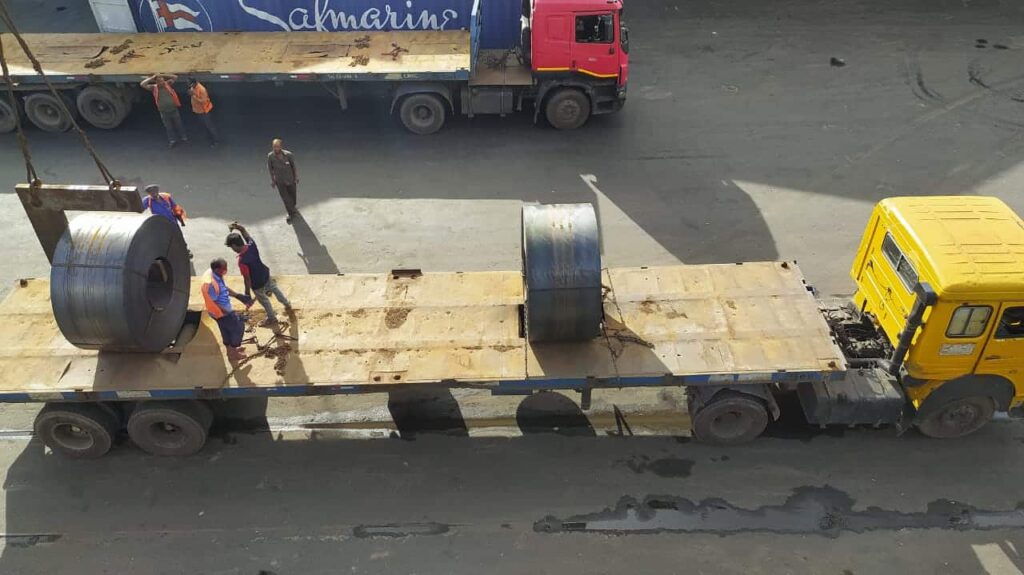
| General Cargo | Mixed goods, including iron materials, cotton, chemicals |
| Petroleum Products | POL, edible oil, handled at Dolphin jetties and SPMs |
| Textiles and Garments | Major export, primarily ready-made garments (RMG) |
Supporting Facilities
- Container terminals equipped with gantry cranes and straddle carriers
- Cargo handling equipment, including mobile cranes and forklifts
- Warehouses and open storage yards for bulk and general cargo
- Cold storage for perishable exports like frozen goods
Draft and LOA Restrictions
| Location | Draft (Meters) | LOA (Meters) |
|---|---|---|
| Jetty | 8.55 | Maximum 190.00 |
| KDDJ | 9.00 | Maximum 180.00 |
| Anchorage | 11.50 | No Restriction |
Anchorage Areas
| Anchorage | Draft (Meters) |
|---|---|
| “A” Anchorage | 11.50 (subject to permissible inward tide/draft) |
| “B” Anchorage | 9.50 |
| “C” Anchorage | 0.00 |
| Kutubdia Anchorage | 15/16 |
Anchorage Details
| Anchorage | Details |
|---|---|
| “Alpha” Anchorage | Customary Lightening Area for vessels with 11.50 m draft |
| “Bravo” Anchorage | For vessels ready to enter the inner harbor within 24 hours |
| “Charlie” Anchorage | For sailing vessels |
| No LOA/BM/Air draft restrictions in Chittagong Inner Anchorage | |
| Chittagong Inner Anchorage is within the Chittagong Port Limit | |
| Boat/Tug Boat/lighter vessels are used for transportation to board vessels at Chittagong Anchorage. | |
Environmental and Operational Specifications
Water Density and Distances
| Category | Details |
|---|---|
| Water Density | Varies at each turn of the tide (semi-diurnal with prominent diurnal effect). Density at CPA outer anchorage varies from 1002 to 1012 kg/m³. |
| Distances | Anchorage to Chittagong port lighthouse: 3–8 nautical miles (radius of 5.6 nautical miles). Kutubdia Anchorage: 32 nautical miles from Chittagong Port lighthouse (no draft and LOA limitations). |
| Kutubdia Anchorage | For vessels over 11.50 m Fresh Water (FW) draft. No Length Overall (LOA), Beam (BM), or Air draft restrictions. Lightening Anchorage. Located 32 NM outside the Chittagong Port Limit. Tug boats/lighter vessels are used for transportation. |
Salinity
| Location | Monsoon Season (g/L) | Dry Season (g/L) |
|---|---|---|
| Sadarghat | Low Water: 0.1, High Water: 0.2 | Low Water: 2.5, High Water: 16.5 |
| Patenga | Low Water: 0.15, High Water: 3.3 | Low Water: 10, High Water: 27 |
Note: 1 g/L equals 1 gram per liter.
Stevedore and Working Hours
| Location | Working Hours | Notes |
|---|---|---|
| Stevedores, Gangs, and Workers | 24 x 7 x 365 (except government holidays) | Operate continuously. |
| Berth | 3 shifts divided equally over 24 hours | Shift-based operations. |
| Anchorage | Continuous discharging | Except for tea, lunch, and dinner breaks. |
Lighter Availability and Crane Capacity
Lighter Availability: Lighters are generally available, though complications may arise for extra income.
| Location/Type | Capacity | Notes |
|---|---|---|
| Chittagong and Mongla Port Cranes | Below two metric tons | Limited capacity. |
| Vessel Cranes | Variable | Maximum cargo discharged via vessel cranes. |
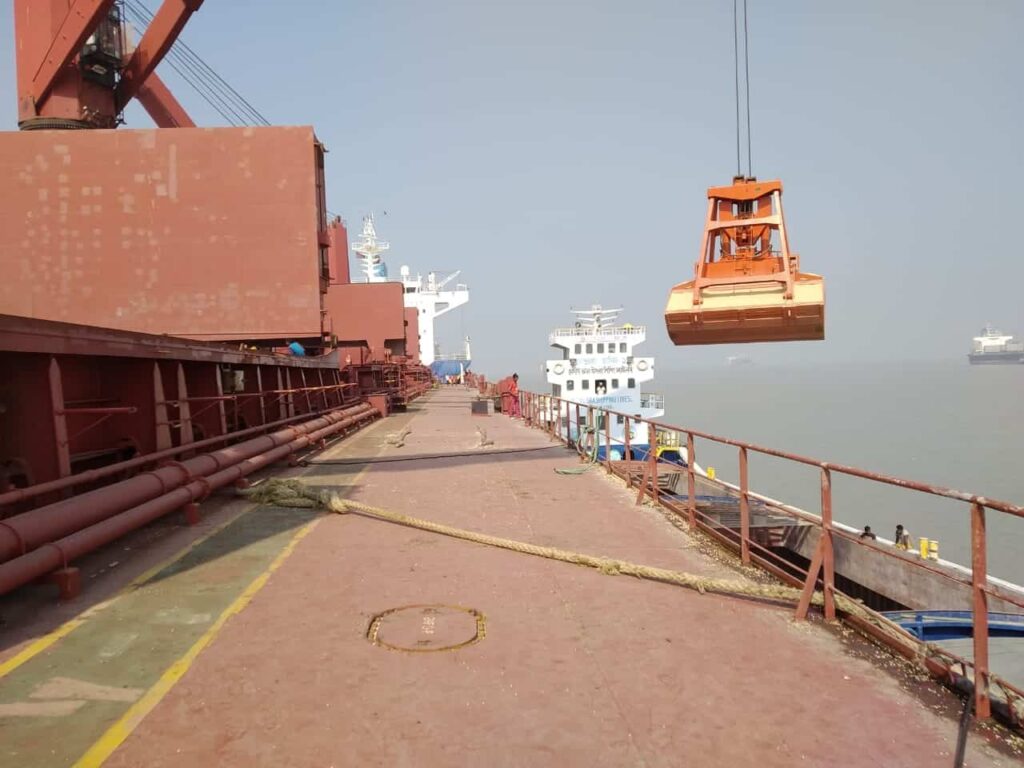
| Port Cranes | Up to 2 metric tons (including grabs) | Used for bagged cargo (50 kg bags). |
Difficulties:
- Consignees often delay clearing customs dues/duties, causing vessel waiting times.
- Limited availability of lighters/barges/trucks.
- Rainy Season.
- Poor consignee warehousing capacity, leading to slow cargo reception.
Documentation and Customs
Required Documentation
| Category | Document |
|---|---|
| General Ship Documentation | Ships Register of Nationality Certificate |
| International Load Line Certificate | |
| Safety Equipment Certificate with Form E | |
| Safety Gear Telegraphy Certificate with Form R | |
| Last Port Clearance | |
| International Oil Pollution Prevention Certificate with Form A | |
| Safety Radio Telegraphy Equipment and Construction Certificate | |
| Cargo Gear Register and Relative Inspection Certificate | |
| Ships Station License/Mobile License | |
| O.C. (Original Certificate or Officer in Charge; clarification may be needed) | |
| Safety and Operational Documentation | SMC (Safety Management Certificate) |
| Continuous Synopsis Record (CSR) | |
| International Ship Security Certificate | |
| Last Port State Control Inspection Report | |
| Annual Testing Report of 693MHz Satellite EPIRB | |
| Safe Manning Certificate | |
| Competency Certificate of Officers as per safe manning (COC, COR, GMDSS) | |
| A certificate with Deck and Engine Rating Certificate as per safe manning | |
| Stability Plan (Container) | |
| Loading Bay Profile |
Customs Formalities
- Crew List (15 copies)
- Personal effects, foreign currency, and valuable goods of Crew members
- Ships store declaration (Deck and Engine, Steward/Provisions, Bonded Stores, Narcotics, General, Bunker Position)
Silo Jetty Details
- Only one berth for discharging government food cargo
- Permissible L.O.A: 190 m
- Beam: No restriction
- Air Draft: 52 m
- W Draft: 9.15 m (subject to day’s permissible inward F/water draft)
Vessel Operations
Vessel Arriving Information
- Incoming vessels proceed from Kutubdia to Alpha Anchorage (Chittagong Outer Anchorage) following BA chart no. 84 and current Admiralty Tide Tables (ATT).
- Contact port control via VHF channel 12/16 while proceeding.
- Arrive at Alpha Anchorage at high tide.
- Start from Kutubdia approximately 3 hours before the high water of Alpha Anchorage.
Discharging Rate
Per day capacity ranges from approximately 3000 to 5000 MT, depending on transportation availability (lighter/barge/truck), the nature and type of cargo, and prevailing weather and sea conditions.
Crane Capacity
| Location/Type | Capacity | Notes |
|---|---|---|
| Chittagong and Mongla Port Cranes | Below two metric tons | Limited capacity. |
| Vessel Cranes | Variable | Maximum cargo discharged via vessel cranes. |
| Port Cranes | Up to 2 metric tons (including grabs) | Used for bagged cargo (50 kg bags). |
Other Operational Information
- Vessel cranes may discharge cargo.
- It is a Tidal Port.
- During rain, discharging may be stopped.
- Port authorities allow 01/02 vessels at a time at the Jetty of scrap-carrying ships.
Weather Conditions
March, April, and May are the months of tornadoes, cyclones, and storms. These may strike anywhere, anytime, without warning, causing havoc. Mariners are advised to remain alert to face threats. Ships’ main engines should be available at very short notice.
Congestion
The port is not currently congested and is expected to remain clear for the next four months. Due to good relations with the port and customs, immediate berthing is available for the client’s vessels.
Tax
No freight tax added, only central bank tax on agency fee as mentioned in DA.
Availability and Services
- Bunker IFO 180 & 380 CST & MGO 180/380 CST available
- Fresh water supplies available
- Fresh provisions, all kinds of stores (Deck/Engine/Saloon/Cabin), including spare parts and machinery available
- Repair, class workshop, hot work permit, and dry dock available
- Experienced engineers for overhauling main engines or auxiliary engines, tuning engines, and generators/compressors
- Sludge/Garbage/Oil mix water/Slop disposal and cleaning with certificate available
- Grab is available in the stevedore’s hand
- Local Pilotage: We recommend local pilotage service for drafts of more than 9.5 meters from the Kutubdia anchorage to the Chittagong outer anchorage A/B/C.
- Fender: In the monsoon season, we recommend hiring Yokohama fenders to avoid damage during discharging at anchorage.
- Draft Survey: To avoid dispute, we recommend appointing a draft surveyor on behalf of the supplier/charterer/owner.
- Other services include an off-hire bunker and condition survey, discharge supervision, Crew Change (Sign On/off), Fresh Water supply at outer anchorage by barge and at Jetty by pipeline, Provision supply, spare parts supply, store supply & ship Chandler service, Class workshop available (GL, BV, RINA, NK), Bunker and lube oil supply.
- Stevedore: Working 24/7 on two shifts, A-0601-1800 hours, B-1801-0600 hours at anchorage, and three shifts A-0801-1600 hours, B-1601-2400 hours, C-0001-0800 hours at the Jetty (On Government holidays, stevedores work by double salary)
Pilotage Position
From anchorage to berth area, pilotage service is available for high tide only during the day.
Max Draft at Berth and Water Density
- Maximum draft at general berth: 8.5 m
- New Mooring Container Terminal (NCT) 03 to NCT 05: 9.0 m
- Density variable
Port Working Hours
- 24 x 7 x 365 days except government holidays
Holiday for January
- General holidays do not apply, but government holidays are observed.
Dry Dock Jetty
- Permissible for discharging stone cargo only.
- No other general or container jetty is allowed to discharge stone cargo.
Distances
- Chittagong – Dry Dock Draft: 8.55 m and LOA 190.0 m
- Distance between Anchorage and Dry Dock: 3.50 nm
- Distance between Anchorage and Matarbari Jetty: 32 nautical miles (approximate)
- Draft at Matarbari Jetty: 8 m (not confirmed by port authority)
- Distance between Anchorage and Kanchan Jetty, Dhaka: 250 nm (approximate)
- Distance between Anchorage and Ghazipur: 300 nm (approximate)
Economic Impact & Trade Statistics
Annual Volume: 3.1M TEUs (2023), contributing 2.5% to Bangladesh’s GDP.
Employment: 150,000+ jobs in logistics, customs, and stevedoring.
Imports: Food grain, Cement clinker, Sugar, Fertilizer, General cargo, Iron Materials, Cotton, Chemicals, Coal, Edible oil, POL, etc.
Exports: Ready-Made Garments (RMG), Knitwear, Fertilizer, Jute and Jute Products, Hides and Skins, Tea, Light Engineering Products, Pharmaceutical Products, Naphtha, Molasses, Frozen goods, etc.
Challenges & Mitigation
| Challenge | Solution | Contact |
|---|---|---|
| Consignee delays | ASYCUDA pre-clearance | |
| Lighter shortages | Book barges 72 hours ahead | Lighter Hire: +8801748966655 |
| Monsoon disruptions | Yokohama fenders + Tug assistance | CPA Operations: VHF Channel 12 |
Regional Competitors
| Port | Draft | TEUs (2023) | Edge |
|---|---|---|---|
| Chittagong | 9.5 m | 3.1M | Low tariffs, a regional gateway |
| Mongla | 7.5 m | 500K | Proximity to Kolkata |
| Colombo | 18 m | 7.2M | Deep-sea transshipment |
Sustainability & Innovation
- Green Port Policy: Solar terminals, mangrove restoration.
- IMO 2020 Compliance: 0.5% sulfur fuel.
- Future Tech: Blockchain cargo tracking (2025), Matarbari Deep Sea Port (2026).
Let us know if you need any further adjustments or additional information!