Navigate Vessels Safely at the Chittagong Port (Bangladesh) Anchorage Information
Navigating vessels safely at the Chittagong Port requires awareness of specific draft restrictions and the varying strengths of currents and tides. Mariners must exercise caution during lightening operations to prevent collisions and should always heed local notices and warnings issued by the Port Authority.
The outer anchorage of Chittagong Port is defined by a radius of 5.6 nautical miles to the west from the Patenga light beacon, located at Lat. 22°13.54′ N, long. 91°48.2′ E. This area is subject to specific draft restrictions, and vessels must be prepared for the varying strengths of currents and tides.
Climatic and hydrographic details related to the Chittagong Port Authority (CPA) outer anchorage are thoroughly recorded and disseminated through various nautical publications. Mariners are advised to consult these resources for the most up-to-date information.
Additionally, the port has implemented measures to ensure the safety of vessels, including regular updates on port conditions and any potential congestion. The CPA provides detailed information on general port restrictions, including drafts, beam, and LOA, as well as regular working hours and average production rates.
By staying informed and adhering to the guidelines provided by the CPA, mariners can navigate the Chittagong Port safely and efficiently.
The Chittagong Port Authority (CPA) anchorage area is segmented into three zones:
– Anchorage A: the northernmost area for vessels with a draught exceeding 11 meters.
– Anchorage B: situated between anchorages A and C, designated for vessels planning to navigate the Karnaphuli River within the next 24 hours.
– Anchorage C: the southernmost area for lightering vessels and those not scheduled to enter within 24 hours. Regions beyond these designated anchorages are considered off port limits. A shallow patch southwest of the anchorage serves as the standard approach for anchorages A and B. The shallowest charted depth of 7.9 m is found in approximately two locations along this path, with most areas having a depth greater than 8.5 m. Tidal heights at low and high water typically range from 0.4 m to 1.5 m and 2.4 m to 4.6 m, respectively, throughout the year. Vessels usually do not wait outside the outer anchorage. Transit inward from the initial arrival at KUTUBDIA Anchorage to Anchorage A requires 3 to 4 hours, navigated by the vessel’s Master or a Private Pilot if requested by the Master/Owners. From Anchorage.
The anchorage at Chittagong can be described as fair, neither particularly good nor bad. Strong tides often necessitate vessels to let out additional cable. During spring tides, which can reach speeds of 6 to 8 knots, and even higher during freshets, it is recommended to keep engines on standby and maintain vigilant anchor watches. Vessels may need to move slowly ahead with the anchor deployed to maintain position over the seabed. The strong underwater currents at Chittagong Outer Anchorage frequently cause vessels, especially those with a deeper draft in fresh water, to drag their anchors. For instance, a vessel with a displacement of 49,184 tons, anchored with 9 shackles in a depth of 12.4 meters, dragged its high holding power anchor and had to proceed at a slow speed to stay in position.
The seabed at Chittagong Outer Anchorage consists of soft mud, which is generally benign in case of grounding. When the Patenga Light-Beacon bears more than about 055°, the seabed is soft mud, increasing the likelihood of anchor dragging. With the beacon bearing less than 055°, the seabed is firmer, but caution is still needed due to the strong ebb tide, particularly during the monsoon season. Vessels at the outer anchorage may also tend to swing in one direction at the change of tidal streams; if this persists, it’s crucial to check the anchor regularly to prevent fouling. The Port Radio Control and Agents emphasize not to pass ahead of other anchored vessels due to the strong currents. The typical dragging direction ranges between 160° and 340°. Consequently, Ship Masters approaching Chittagong are advised against trying to cross the bow of other vessels.
The permissible draft for vessel entry at the port fluctuates daily, with the maximum limit being 9.14 meters. This is the upper limit for river passage, while the maximum draft allowed at the discharging berth is only 8.53 meters. Consequently, vessels arriving with a draft exceeding the permissible limit must offload cargo at Chittagong outer anchorage.
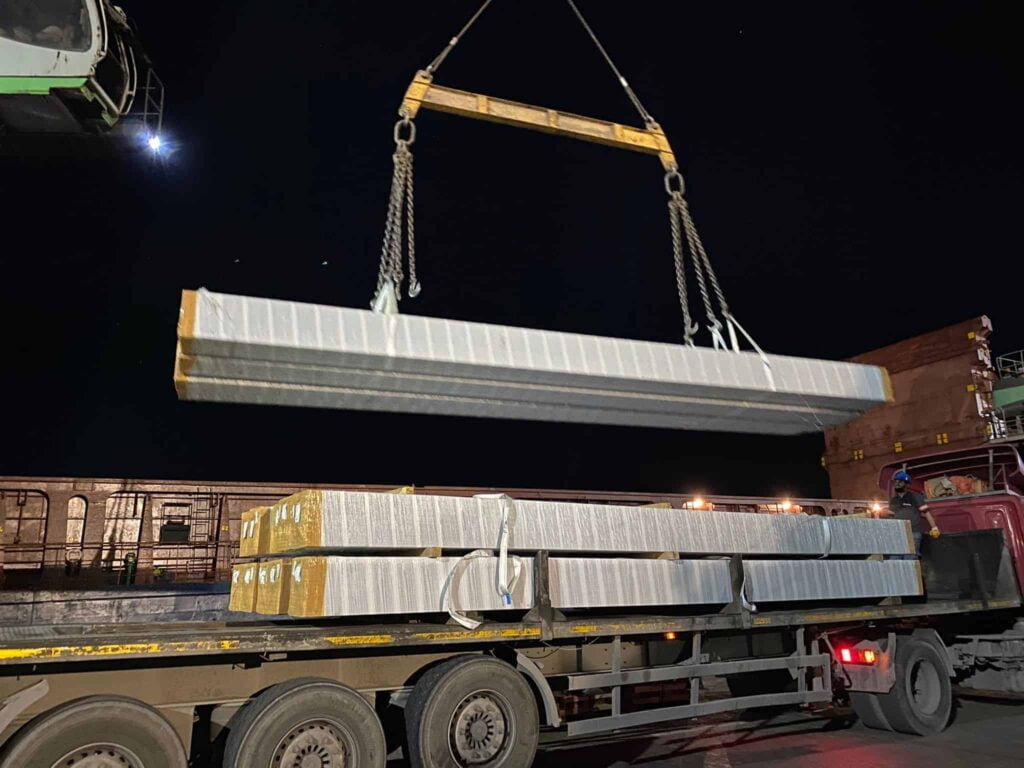
Chittagong outer anchorage serves as an open lighterage area for vessels with drafts greater than the port’s permissible limit. Lighterage operations are conducted within the anchorage’s commercial boundaries. Vessels at CPA outer anchorage stay anchored, typically riding the tide and swinging with tidal changes. A strong underwater current of 6 to 7 knots is common, affecting vessels with deeper drafts. Lighter vessels that approach the mother vessels are secured to them using mooring lines to prevent damage during berthing, unberthing, and while alongside. Adequate fenders are employed by the lighter vessels to avoid damage. High waves and swells are also common, making lightering challenging and sometimes uncertain during bad weather. Mother vessels may drag anchor due to strong currents, but this can be prevented by deploying a sufficient length of anchor chain, about nine shackles, and maintaining vigilant watches, including engine readiness.
The lightening of cargo becomes more challenging during the monsoon season, which spans from May to October. During this period, lightering operations can be particularly difficult due to rough weather conditions.
Masters of vessels are advised to heed Admiralty Notices that detail prohibited and proposed anchorages. Upon arrival at the outer anchorage, vessels must navigate to the designated anchorage area, avoiding the prohibited zones, and contact Port Radio Control on VHF-ch-12 to report their anchoring time and position. Port Radio Control maintains a vigilant watch, documenting vessel arrivals and departures, and communicates essential advance information. For safe navigation, it is imperative to follow the navigational information in accordance with Chittagong port regulations.
1. Ship movement typically begins approximately 4 to 5 hours before the day’s high tide.
2. The movement of vessels, indicated as AM & PM, depends on the draft, tidal rise, berth availability, and daylight. It is required to consult the Harbour Master 24 hours before movement. Ships with the day’s maximum draft will be scheduled for AM or PM based on daylight hours.
3. During spring tides, freshets, or foul weather, vessels under 7 knots will not be classified as GRADE-II for operational purposes and will be handled accordingly. Agents must consult in advance.
4. The port is not liable for any reduction in declared draft due to unforeseen freshet effects or other causes. Owners and agents should consult in advance regarding deep draft vessels.
5. Vessels entering or leaving the port must have full power on the main engine and deck machinery. Both anchors, with the full length of the chain, must be ready for use at all times.
6. All vessels entering or leaving the port must display their signal letters.
7. a. Ship Masters must anchor away from the “PROHIBITED ANCHORAGE” area.
b. Ship Masters should not anchor their vessels near the river entrance.
c. Great care must be taken when maneuvering during pilot embarkation or disembarkation.
d. A pilot ladder must be provided as per regulation.
e. Ship Masters should be aware of strong tidal conditions at the outer anchorage.
f. Utmost care is necessary when maneuvering, anchoring, or heaving up anchors.
g. Vessels should never attempt to cross bows at close range.
8. Ship Masters are advised to keep watch on the forecastle and poop while at outer anchorage.
9. Ship masters must send their ETA, DRAUGHT, and other particulars to the undersigned well in advance.
10. All ships in port are required to provide necessary “RAT GUARDS” on the mooring ropes.
11. Upon arrival and before departure, ship masters must ensure that the vessel’s draught marks are clearly visible for pilots to accurately read the draught.
12. Ship masters must ensure that no major chipping of the ship’s side is carried out while the vessel is in port.
13. Excessive “SMOKING” from vessels within the port area is strictly prohibited.
14. Discharging water onto the jetty and listing of vessels while alongside is strictly prohibited.
15. As Karnafulli is a tidal river, it is essential for vessels entering the port to have six sturdy ropes (HAWSER & WIRE) forward and six aft for mooring purposes.
16. In an emergency, the signal for a tug in port consists of four prolonged blasts on the whistle.
17. In an emergency, the following may be contacted on phones:
18. A VHF(R/T) watch is maintained in the Port Administrative Building 24/7, and contact can be made at any time on channel-12 (Frequency 156.6MHZ) or channel-16 (Frequency 156.8MHZ). A watch on 2182 KHZ is also maintained simultaneously.
19. Ship masters approaching Chittagong Road are advised not to cross the bow of vessels at anchor or underway to prevent drifting and potential collision due to the strong current at the outer anchorage. If crossing is unavoidable, ship masters should proceed with caution, giving a wide berth to the vessels at anchor or underway, considering the minimum current velocity of 6 knots and other marine factors.
20. When vessels are on standby from Radio Control for port entry and the Pilot is en route, it is recommended that the ship’s master heave up anchor and wait for the Pilot, steaming with the tide near the position of Patenga Lighthouse, bearing 045º (T) at a distance of 2 miles, if it is safe to do so.
21. Vessels with containers on deck that obstruct a clear forward view or a clear view of the starboard side when viewed from the port bridge wing, and vice versa, will not be permitted to navigate in the Karnafulli River channel. The presence of small craft crossing the vessel’s bow must be considered when assessing a clear view.
22. Vessels arriving for demolition purposes are advised to anchor north of Lat: 22º 16′, which is north of Alfa Anchorage.
23. In all circumstances, the international regulations for preventing collisions at sea, established in 1972 and amended in 2002, must be followed as closely as possible while navigating within the port limits of CPA.
24. Admiralty Chart No. 84 “Approaches to the Karnafuli River” and Admiralty Chart No. 859 “Elephant Point to Matla River” should be consulted.